- anubhavpt01@gmail.com |
- +91 9422691335
- Follow Us :
Since Village Level Workers Training (VLWT) and APT’s inceptions, we have tried to implement and conduct educational activities following the principles of “Experiential Learning”, that is Learning by Doing, Learning from the Community and Self-learning. Through Personal Experiences, Self and Group Reflections and Introspection, Blending theory with practical to give a clear understanding and encourage Youth Movement for Social Change specially for the Poor.
Experiential learning is an effective educational method. It engages the learner at a more personal level by addressing the needs and wants of the individual. Experiential learning requires qualities such as self-initiative and self-evaluation. For experiential learning to be truly effective, it should employ the whole learning wheel, from goal setting, to experimenting and observing, to reviewing, planning and finally action. This complete process enables one to learn new skills, new attitudes and develop a new perspective.
• Experiential learning occurs when carefully chosen experiences are supported by reflection, critical analysis and synthesis.
• Experiences are structured to require the learner to take initiative, make decisions and be accountable for results.
• Throughout the experiential learning process, the learner is actively engaged in posing questions, investigating, experimenting, being curious, solving problems, assuming responsibility, being creative, and constructing meaning.
• Learners are engaged intellectually, emotionally, socially, soulfully and/or physically. This involvement produces a perception that the learning task is authentic.
• The results of the learning are personal and form the basis for future experience and learning.
• Relationships are developed and nurtured: learner to self, learner to others and learner to the world at large.
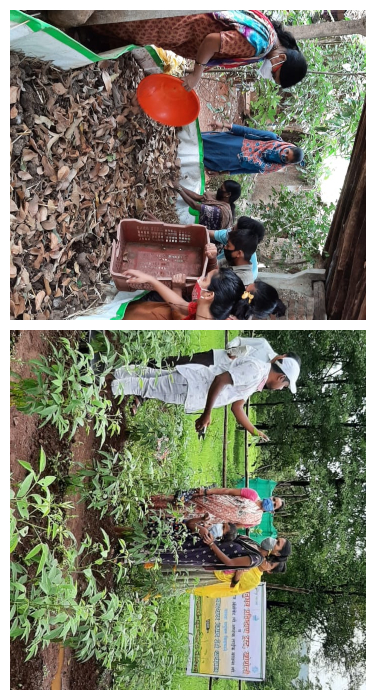
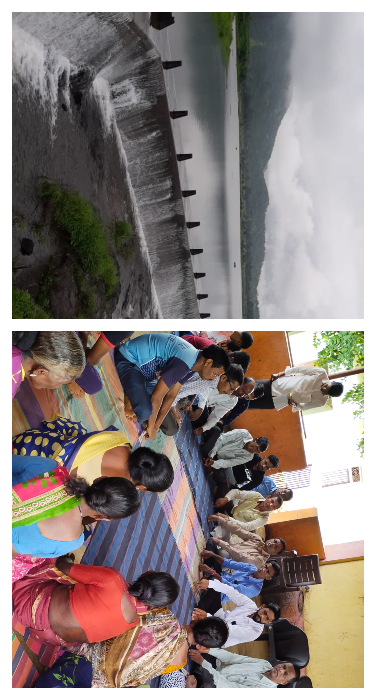
• The educator and learner may experience success, failure, adventure, risk-taking and uncertainty, because the outcomes of experience cannot totally be predicted.
• Opportunities are nurtured for learners and educators to explore and examine their own values.
• The educator's primary roles include setting suitable experiences, posing problems, setting boundaries, supporting learners, insuring physical and emotional safety, and facilitating the learning process.
• The educator recognises and encourages spontaneous opportunities for learning.
• Educators strive to be aware of their biases, judgments and pre-conceptions, and how these influence the learner.
• The design of the learning experience includes the possibility to learn from natural consequences, mistakes and successes.
• Continuing Education is similar to adult education, at least in being intended for adult learners, especially those beyond traditional undergraduate college or university age.
• Interpersonal Communication Skills :- Gain perspective on how effectively to communicate (verbally and non-verbally) with others and learn how to improve their personal effectiveness.
• Active Listening Skills :- Responsive to others and demonstrate understanding.
• Assertiveness Skills :- Gain experience behaving assertively, by developing their ability to be honest and direct while expressing their own thoughts, feelings, and interests to others without infringing on their basic rights.
• Individual Empowerment/Initiative:- Personal capacity to make a difference and contribute positively to society.
• Self-Awareness :- Able to identify their own culturally influenced feeling and beliefs.
• Self-Esteem :- They like themselves feel worthwhile, confident, competent, and like they belongs and are needed.
• Flexibility :- Adapt to changes and can tolerate ambiguity.
• Willingness to Take Risks :- Open to new ideas and processes and are willing to develop and implement them.
• Social Comfort :- Comfortable and feel competent in a variety of social situations.
• Social Sensitivity :- Gain understanding and appreciation and an ability to relate to people from a wide range of backgrounds and life situations..
• Intercultural Competency :- Gain an understanding of other cultures and how an individual’s own culture has shaped their worldview.
• Multicultural Competency :- Respect, appreciate, and seek out opportunities to engage in cross-cultural situations.
• Self-Awareness :- Able to identify their own culturally influenced feeling and beliefs.
• Intergenerational Connectedness :- Gain an ability to interact and work cooperatively with familial and non-familial adults and effectively seek advice and learn from people of all ages.
• Team Responsibility :- Value working with a group to accomplish a task and believe a group can often accomplish more than an individual.
• Group Process Skills :- Work well in a group to achieve a task and elicit participation from group members while fully participating.
• Specific Subject Matter Knowledge :- Acquire expertise by broadening and deepening their understanding of the subject in their particular area of interest or in synch with the goals of the service-learning course objectives and gain a better understanding of how to apply this knowledge in a community context.
• Critical Thinking Skills :- Able to utilise techniques such as decision-making, problem-solving, and analytical skills in understanding complex social problems from multiple perspectives.
• Engages Learner :- Become more interested and motivated to learn and invests time in education because they understand the relevance and importance of their academic work in relation to everyday life, career choices, and lifelong learning.